

Relazione sulla gestione e sulla sostenibilità sul 2025 in sintesi
L'azione istituzionale
Le decisioni e le azioni della Banca d'Italia sono finalizzate principalmente al perseguimento della stabilità monetaria e della stabilità del sistema finanziario nel suo complesso e nelle sue singole componenti (ossia intermediari, operatori e infrastrutture di trading e post-trading). Rispetto a questi obiettivi, le funzioni istituzionali possono essere ricondotte a quattro aree: la moneta, il sistema finanziario, la ricerca e la statistica, i servizi per lo Stato.
Per ciascuna area vengono descritte le novità dell'anno e riportate, nei riquadri finali, le principali funzioni svolte.

Moneta
La politica monetaria. - Nel corso del 2025 il Consiglio direttivo della Banca centrale europea ha riesaminato la strategia di politica monetaria, confermando sia l'obiettivo di inflazione simmetrico al 2 per cento nel medio termine, sia l'assetto operativo. In un contesto di graduale miglioramento delle prospettive sull'inflazione, il Consiglio, dopo aver ridotto a più riprese i tassi ufficiali, ha deciso da luglio del 2025 di lasciarli invariati a fronte di una inflazione intorno all'obiettivo del 2 per cento. Il conflitto in Medio Oriente scoppiato alla fine di febbraio del 2026 ha reso lo scenario significativamente più incerto; le informazioni che si renderanno disponibili nel prossimo futuro consentiranno di valutare l'impatto della guerra sulle prospettive di inflazione e sui rischi associati. Per definire l'orientamento di politica monetaria adeguato, il Consiglio ha ribadito che continuerà a seguire un approccio guidato dai dati in base al quale le decisioni verranno adottate di volta in volta a ogni riunione.
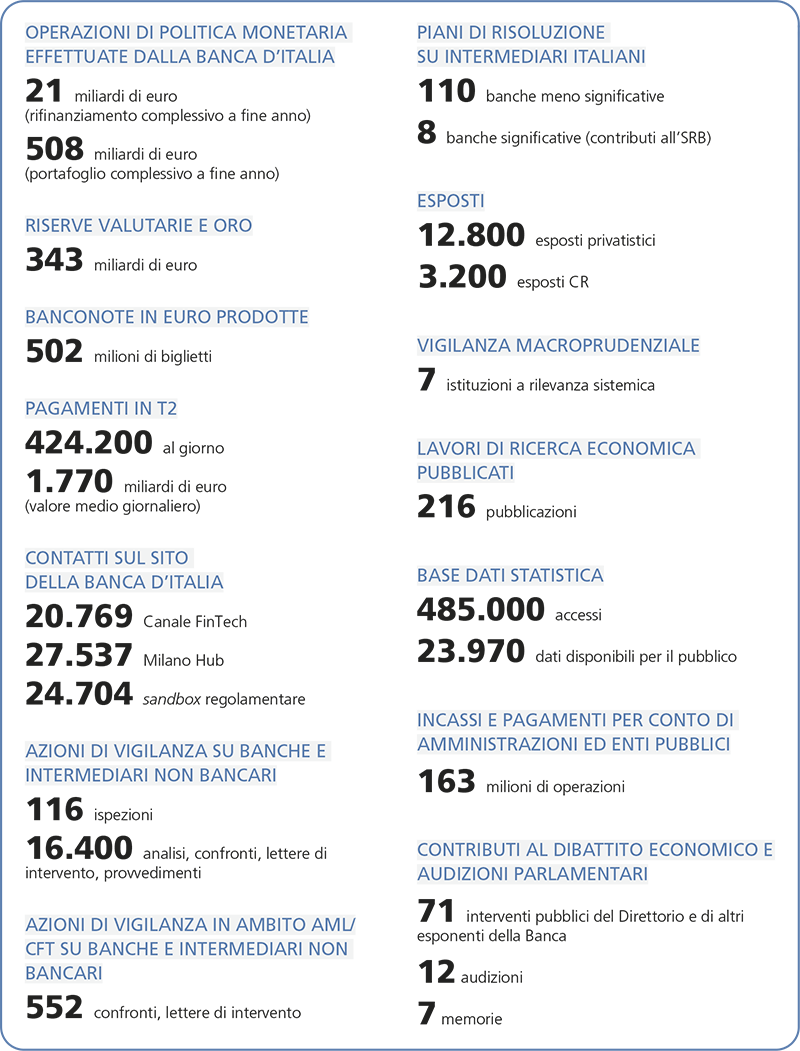
Alla fine dell'anno le attività di politica monetaria della Banca d'Italia ammontavano a 529 miliardi di euro (614 alla fine del 2024) ed erano pari al 14 per cento del totale dell'Eurosistema. La flessione va attribuita principalmente alla riduzione dei titoli di politica monetaria per effetto della completa interruzione dei reinvestimenti.
Le riserve valutarie e l'oro. - Al 31 dicembre 2025 il controvalore delle riserve auree e delle attività nette in valuta - detenute e gestite dalla Banca a norma del Trattato di funzionamento dell'Unione europea e dello Statuto del Sistema europeo di banche centrali (SEBC) - era di 343 miliardi di euro, in aumento di 88 miliardi rispetto alla fine del 2024 per il forte incremento della quotazione dell'oro (il cui controvalore è passato, a quantità invariate, da 198 a 289 miliardi). Sono state effettuate operazioni in cambi per un controvalore di 3,7 miliardi di euro (in linea con il 2024), con l'obiettivo di garantire la copertura degli esborsi e degli introiti in valuta estera della Repubblica italiana e di gestire le riserve valutarie.
Le banconote. - Nell'anno l'Istituto ha prodotto 502 milioni di biglietti nei tagli da 20 e da 50 euro, pari al 17 per cento del totale dell'area dell'euro, oltre a ulteriori 105 milioni di banconote per finalità di test per conto della BCE e nell'ambito della cooperazione con altre banche centrali. Le banconote in euro in circolazione in Italia (stimate in 5,7 miliardi di biglietti) sono aumentate dell'1,3 per cento rispetto al 2024; quelle intermediate e verificate (4 e 1,9 miliardi, rispettivamente) sono diminuite dell'1,9 e del 6,4 per cento. È proseguita la partecipazione della Banca, in linea con i principi definiti dalla Strategia per il contante dell'Eurosistema, ai lavori sul quadro normativo europeo in materia di accesso e accettazione del contante.
I sistemi di pagamento. - Nell'ambito dei servizi TARGET è cresciuto il numero delle transazioni regolate, soprattutto quello dei pagamenti istantanei gestiti tramite TIPS, il cui volume è più che raddoppiato. Da aprile del 2025 TIPS e T2 regolano anche pagamenti in corone danesi. Nel corso dell'anno sono state completate in TIPS le funzionalità che consentono il regolamento di pagamenti tra due diverse valute. A giugno del 2025 è stato avviato il nuovo sistema di gestione delle garanzie per le operazioni di credito dell'Eurosistema (Eurosystem Collateral Management System, ECMS). La Banca ha continuato ad essere impegnata nei progetti strategici dell'Eurosistema, in particolare Pontes e Appia, che mirano a consentire il regolamento in moneta di banca centrale delle transazioni effettuate su piattaforme basate su tecnologie a registro distribuito (distributed ledger technologies, DLT). Si tratta di iniziative che servono a collegare il mondo delle infrastrutture finanziarie tradizionali con quello delle nuove piattaforme digitali. Nel breve periodo, Pontes faciliterà il dialogo tra sistemi già esistenti e nuove tecnologie; nel medio termine, Appia contribuirà alla costruzione di un ecosistema finanziario europeo più integrato, efficiente e innovativo.
L'euro digitale. - Alla fine di ottobre del 2025 è stato approvato l'avvio della nuova fase del progetto dell'euro digitale, durante la quale l'Eurosistema si concentrerà sullo sviluppo dell'infrastruttura, sul supporto al processo legislativo, sul completamento del quadro regolamentare per gli intermediari e sul coinvolgimento del mercato, anche attraverso la realizzazione di iniziative pilota; una prima emissione è prevista per il 2029. La Banca d'Italia partecipa al progetto sia come membro dell'Eurosistema, nell'ambito della governance coordinata dalla BCE, sia nell'Alliance for the Digital Euro in cui, insieme ad altre cinque banche centrali nazionali (BCN), svolge un ruolo di primo piano nello sviluppo della piattaforma di servizi dell'euro digitale.
La supervisione sui mercati, la sorveglianza sui sistemi e sugli strumenti di pagamento. - Il monitoraggio dei mercati finanziari, delle relative infrastrutture e dei sistemi di pagamento è stato intensificato con una particolare attenzione ai rischi per la stabilità finanziaria. È stato rafforzato il confronto con gli esponenti aziendali, con i quali si sono tenute 725 riunioni nel corso del 2025 (530 nel 2024). È proseguito il sostegno sia al processo di espansione dei servizi offerti dalla controparte centrale, sia agli sviluppi normativi per promuovere l'innovazione finanziaria in ambito europeo e nazionale e l'integrazione dei mercati. Nel quadro della cooperazione con le altre autorità europee e internazionali, l'apporto della Banca è aumentato, con 546 contributi alle decisioni dei comitati dell'Eurosistema (488 nel 2024) e 808 contributi in altre sedi di coordinamento sovranazionale (701 nel 2024). È stato potenziato l'impegno per la resilienza operativa e cibernetica del sistema finanziario, anche in attuazione del regolamento Digital Operational Resilience Act (DORA). La sorveglianza si è concentrata sia sul corretto funzionamento degli strumenti, dei servizi di pagamento e dei relativi circuiti, sia sugli schemi di pagamento a rilevanza nazionale ed europea, mentre l'attività di monitoraggio e analisi del mercato ha riguardato soprattutto le abitudini di pagamento dei consumatori e la sicurezza dei diversi strumenti di pagamento. Sono proseguite le iniziative nell'ambito del Comitato Pagamenti Italia (CPI) e dei facilitatori di innovazione gestiti dall'Istituto, confermando il ruolo della Banca nel promuovere il dialogo con il mercato e nell'accompagnare l'evoluzione dell'ecosistema dei pagamenti. Attraverso il Canale FinTech, l'Istituto ha continuato a confrontarsi con operatori attivi su soluzioni innovative, mentre Milano Hub ha selezionato progetti dedicati ai pagamenti istantanei e digitali, contribuendo alla sperimentazione e allo sviluppo di servizi finanziari più evoluti.
COSA FA LA BANCA D'ITALIA
Area Moneta
POLITICA MONETARIA
La Banca contribuisce alle decisioni dell'Eurosistema volte a perseguire l'obiettivo primario della stabilità dei
prezzi. Per indirizzare l'inflazione verso il target, l'Eurosistema interviene con misure attraverso cui immette
liquidità nel sistema bancario o la assorbe da esso.
RISERVE VALUTARIE E ORO
La Banca amministra le riserve ufficiali del Paese costituite da attività in valuta estera e oro; esse sono parte
integrante di quelle dell'Eurosistema.
BANCONOTE E MONETE
La Banca produce annualmente la quantità di banconote stabilita dall'Eurosistema, immette in circolazione i
biglietti e provvede alla verifica delle banconote riconsegnate, occupandosi del ritiro e della distruzione di
quelle non più idonee alla circolazione.
SISTEMI DI PAGAMENTO
La Banca gestisce le infrastrutture dei pagamenti dell'Eurosistema: T2 per il regolamento
dei pagamenti all'ingrosso, TARGET2-Securities
(T2S) per il regolamento delle transazioni in titoli, TARGET Instant
Payment Settlement (TIPS)
per i pagamenti istantanei, e il sistema di compensazione nazionale BI-comp.
PROGETTO DELL'EURO DIGITALE
La Banca partecipa al progetto per l'introduzione di una moneta elettronica di banca centrale.
SUPERVISIONE SUI MERCATI E SORVEGLIANZA SU SISTEMI E STRUMENTI DI PAGAMENTO
La Banca concorre ad assicurare la stabilità monetaria e finanziaria e un sistema dei pagamenti efficiente e sicuro.

Sistema finanziario
La vigilanza sugli intermediari bancari e finanziari. - Nel 2025 l'azione di vigilanza prudenziale sulle banche e sugli altri intermediari ha riguardato principalmente: (a) i rischi di credito, con approfondimenti sulla gestione dei crediti deteriorati e sull'efficacia delle operazioni di cartolarizzazione; (b) i rischi di liquidità e di tasso di interesse, per valutare la stabilità delle fonti di raccolta nell'attuale contesto, caratterizzato da elevata incertezza; (c) il rischio informatico e le implicazioni connesse con le nuove tecnologie e con l'esternalizzazione dei servizi informatici; (d) l'adeguatezza patrimoniale e i modelli di business; (e) il rischio climatico e la finanza sostenibile; (f) gli assetti di governo societario. Sono state eseguite oltre 11.200 azioni di vigilanza conoscitiva e correttiva sulle banche e quasi 4.300 sugli intermediari non bancari. L'Istituto ha partecipato a 25 ispezioni presso banche significative italiane, sia di vigilanza prudenziale sia per la convalida di modelli interni (30 nel 2024). Presso le banche meno significative, ha svolto 22 ispezioni (26 nel 2024) di vigilanza prudenziale (di cui 19 a spettro esteso). Sono state inoltre condotte 43 ispezioni su soggetti finanziari non bancari (40 nel 2024). Nell'anno la Banca ha valutato le istanze di acquisizione di partecipazioni qualificate di alcuni gruppi bancari significativi italiani e ha trasmesso le relative proposte di autorizzazione alla BCE, cui compete l'adozione del provvedimento finale. Nel 2025 ha disposto la sottoposizione ad amministrazione straordinaria di un intermediario e di due succursali di banche estere, ha prorogato e poi concluso gli incarichi dei commissari in temporaneo affiancamento ai consigli di amministrazione di due banche e ha disposto proroghe di amministrazioni straordinarie. La Banca ha contribuito anche alle analisi e al dibattito per la definizione delle politiche, degli standard internazionali e delle norme europee e adeguato le disposizioni nazionali.
La vigilanza in materia di contrasto al riciclaggio e al finanziamento del terrorismo.
-
Nel 2025, la Banca d'Italia ha sottoposto al ciclo annuale di vigilanza in materia di contrasto al
riciclaggio e al finanziamento del terrorismo (anti-money laundering/countering the financing of
terrorism, AML/CFT) 356 intermediari; su 32 gruppi bancari è stata svolta anche un'analisi a livello di
gruppo. Sono stati effettuati 552 interventi, 38 ispezioni e 3 indagini tematiche, in linea con l'anno
precedente. L'Istituto ha partecipato ai tavoli europei e nazionali dedicati all'attuazione del nuovo quadro
regolamentare europeo e ha collaborato alla valutazione sul sistema AML/CFT italiano condotta dal Gruppo di
azione finanziaria internazionale (GAFI). Ha inoltre esteso le proprie disposizioni di vigilanza ai prestatori
di servizi in criptoattività e recepito gli orientamenti dell'Autorità bancaria europea (European Banking
Authority, EBA) volti a garantire l'attuazione delle misure restrittive adottate a livello dell'Unione e
nazionale.
La tutela dei clienti e l'educazione finanziaria. - Nel 2025, in esito alle attività di vigilanza, a distanza e ispettive, è stato chiesto agli intermediari di restituire alla clientela 35,4 milioni di euro (54 nel 2024). La Banca ha esaminato circa 12.800 esposti privatistici (11.800 nel 2024) e poco più di 3.200 esposti relativi alla Centrale dei rischi (CR; poco più di 2.800 nel 2024) con un tempo medio di risposta, rispettivamente, di 13 e 18 giorni. L'Arbitro Bancario Finanziario (ABF) ha definito quasi 12.500 ricorsi (14.000 nel 2024) accogliendone, totalmente o parzialmente, il 37 per cento; la durata media della procedura è stata di 107 giorni (114 giorni nel 2024). Nel 19 per cento dei casi è stata dichiarata la cessazione della materia del contendere per l'accordo intervenuto tra le parti. Con riferimento all'educazione finanziaria, si sono intensificati i progetti indirizzati a specifici destinatari (in particolare adulti in condizioni di vulnerabilità economica), le attività destinate alle scuole e le iniziative di divulgazione. Nell'ambito della regolamentazione di tutela e dell'educazione finanziaria l'Istituto ha collaborato con i Ministeri competenti e ha partecipato ai principali gruppi e consessi tematici nazionali e internazionali. Nel gennaio 2026 la Banca ha sottoscritto un nuovo protocollo d'intesa con il Ministero dell'Istruzione e del merito per la promozione nelle scuole dell'educazione finanziaria, che attualmente è prevista per legge come materia curricolare.
La gestione delle crisi. - In qualità di autorità nazionale di risoluzione, nel 2025 la Banca d'Italia ha preso parte alle attività di diverse istituzioni e consessi europei, partecipando altresì ai lavori sulla revisione della normativa sulla gestione delle crisi e la protezione dei depositi. È proseguita la collaborazione con il Comitato di risoluzione unico (Single Resolution Board, SRB) sulle attività di pianificazione della risoluzione per le banche significative ed è stato completato il ciclo di pianificazione per quelle meno significative. L'Istituto ha contribuito, all'interno dell'SRB, alla redazione di 8 piani di risoluzione per banche significative italiane e ha approvato 110 piani riguardanti banche meno significative. Nel 2025 sono state disposte due nuove procedure di liquidazione coatta amministrativa; alla fine dell'anno ne erano in corso 38 relative a 18 banche, 6 società di intermediazione mobiliare (SIM), 1 capogruppo di SIM, 8 società di gestione del risparmio (SGR), 2 istituti di pagamento e 3 società finanziarie. Le liquidazioni volontarie oggetto di supervisione sono state 19 (di cui 3 avviate nel 2025): 3 relative a banche e 16 ad altri intermediari. I dati sono sostanzialmente in linea con quelli del 2024.
La stabilità finanziaria e le politiche macroprudenziali. - Nel corso del 2025 la Banca d'Italia ha svolto analisi ad ampio spettro sulla vulnerabilità di imprese e famiglie, sulla qualità dei prestiti bancari, sui rischi connessi con l'andamento del mercato immobiliare e su quelli derivanti dall'attività degli intermediari non bancari, nonché sul possibile impatto dei cambiamenti climatici e della digitalizzazione dell'industria finanziaria. Ha inoltre partecipato alla discussione sulla stabilità finanziaria nelle varie sedi di cooperazione internazionale. Sono proseguite le valutazioni sull'adeguatezza delle riserve macroprudenziali di capitale richieste alle banche.
COSA FA LA BANCA D'ITALIA
Area Sistema Finanziario
VIGILANZA SUGLI INTERMEDIARI BANCARI E FINANZIARI
La Banca è autorità di vigilanza a salvaguardia della solidità delle banche e degli altri intermediari
finanziari, per la tutela del risparmio e per la stabilità del sistema finanziario. I poteri sulle banche e
sulle società di intermediazione mobiliare sono esercitati secondo le modalità stabilite dal Meccanismo di
vigilanza unico (Single Supervisory Mechanism, SSM) attivo fra i paesi dell'area dell'euro.
VIGILANZA IN MATERIA DI CONTRASTO AL RICICLAGGIO E FINANZIAMENTO AL TERRORISMO
La Banca dispone di poteri normativi, di controllo e sanzionatori nei confronti degli intermediari bancari e
finanziari.
PREVENZIONE DEL RICICLAGGIO E UNITÀ DI INFORMAZIONE FINANZIARIA PER L'ITALIA
L'Unità
di informazione finanziaria per l'Italia (UIF), interna all'Istituto ma autonoma e indipendente sul
piano operativo, analizza sotto il profilo finanziario le segnalazioni di operazioni sospette di riciclaggio e
di finanziamento del terrorismo e trasmette i risultati delle analisi alle autorità investigative competenti.
TUTELA DEI CLIENTI ED EDUCAZIONE FINANZIARIA
La Banca promuove la tutela dei clienti e l'educazione finanziaria attraverso la regolamentazione e la vigilanza
sul comportamento degli intermediari, nonché fornendo servizi di tutela individuale e promuovendo iniziative di
sostegno all'educazione finanziaria.
GESTIONE DELLE CRISI
La Banca è autorità nazionale di risoluzione e gestione delle crisi, per fronteggiare in modo ordinato eventuali
dissesti bancari salvaguardando la stabilità finanziaria e contenendo i costi per la collettività. Questi poteri
sono esercitati nei limiti e secondo le modalità stabilite dal Meccanismo di risoluzione unico (Single
Resolution Mechanism, SRM) attivo fra i paesi dell'area dell'euro.
STABILITÀ FINANZIARIA E POLITICHE MACROPRUDENZIALI
La Banca persegue la stabilità finanziaria esercitando la vigilanza macroprudenziale sul sistema finanziario nel
suo complesso, per la mitigazione dei rischi sistemici.

Ricerca e statistica
La ricerca, le analisi e le relazioni economiche e finanziarie. - Nel 2025 l'attività di ricerca della Banca d'Italia si è focalizzata su vari temi di economia reale, monetaria e finanziaria. L'analisi dell'economia reale si è concentrata: (a) sulla dinamica delle principali variabili macroeconomiche alla luce delle trasformazioni del sistema produttivo dovute all'innovazione e al trasferimento tecnologico, all'evoluzione del contesto istituzionale e a nuove tensioni geopolitiche e commerciali; (b) sul ruolo delle aspettative e della crescita di salari, produttività e margini di profitto nella determinazione dell'inflazione; (c) sui tempi, le modalità e l'intensità di propagazione degli shock esogeni al sistema economico. Lo studio della politica monetaria si è focalizzato sull'orientamento più efficace a contrastare tali shock e sulla valutazione della sua trasmissione, nel nuovo quadro macroeconomico di rientro dall'alta inflazione degli anni precedenti, di forte aumento dell'incertezza e di perdurante debolezza della crescita. Sono stati pubblicati 146 lavori di ricerca nelle principali collane dell'Istituto e 70 contributi esterni, consistenti ad esempio in articoli pubblicati in riviste scientifiche (rispettivamente 128 e 91 nel 2024). Nel contesto della cooperazione internazionale, la Banca d'Italia ha partecipato, assieme al Ministero dell'Economia e delle finanze (MEF), a varie attività in ambito G20 e G7, incentrate sugli obiettivi di stabilità macroeconomica e finanziaria, di crescita robusta, inclusiva e sostenibile, di sfruttamento del potenziale delle nuove tecnologie e di contenimento dei rischi connessi. La cooperazione tecnica a favore dei paesi emergenti è proseguita: sono state realizzate 116 iniziative, coinvolgendo oltre 900 esperti provenienti da 62 paesi, in prevalenza dell'area dei Balcani occidentali e dell'Africa (100 iniziative e 1.000 esperti da 77 paesi nel 2024).
Le statistiche. - Nel 2025 è cresciuto ulteriormente l'interesse del pubblico verso le statistiche diffuse dalla Banca d'Italia: sono aumentati di quasi un quarto i download delle pubblicazioni statistiche periodiche (da 817.000 a 1.009.000), di quasi un decimo gli accessi alla Base dati statistica (BDS, da 449.000 a 485.000). Sono state condotte oltre 25.000 interviste a imprese, famiglie e altri operatori economici. È proseguita con intensità la collaborazione con l'Istat per migliorare la coerenza tra le statistiche sull'estero e i conti nazionali. L'Istituto ha continuato a fornire un contributo rilevante ai progetti strategici dell'Eurosistema nella raccolta e compilazione delle statistiche monetarie, bancarie e finanziarie.
COSA FA LA BANCA D'ITALIA
Area Ricerca e Statistica
RICERCA E ANALISI ECONOMICA
La Banca svolge attività di ricerca e analisi economica a supporto dell'azione istituzionale nell'ambito della
politica monetaria, del perseguimento della stabilità finanziaria, della cooperazione internazionale e della
consulenza al Parlamento e al Governo.
STATISTICHE
La Banca cura la raccolta, la compilazione e la diffusione di statistiche su moneta, credito, finanza, sistema
dei pagamenti, bilancia dei pagamenti, conti finanziari e finanza pubblica.

Servizi per lo Stato
I servizi per lo Stato. - Nel 2025 la Banca ha eseguito 53 milioni di operazioni di incasso e pagamento per conto di Amministrazioni dello Stato e 110 milioni per altri enti pubblici (rispettivamente 48 e 109 nel 2024); ha inoltre curato per conto del MEF il collocamento di titoli di Stato per un valore nominale complessivo di 544 miliardi di euro (546 nel 2024). Dal 1° gennaio 2025 è operativa gran parte delle innovazioni previste dal programma di revisione dell'architettura informatica delle procedure di tesoreria (ReTes) che ha semplificato i processi di incasso e pagamento, introducendo tra l'altro uno standard unico per l'interazione con le Amministrazioni pubbliche. Lo scorso anno si è inoltre conclusa la digitalizzazione di una vasta gamma di pagamenti rivolti alle Amministrazioni dello Stato, grazie alla piattaforma incassi di Poste Italiane.
COSA FA LA BANCA D'ITALIA
Area Servizi per lo Stato
La Banca è il tesoriere dello Stato e in questo ruolo esegue tutte le disposizioni di pagamento delle Amministrazioni statali, incassa le somme loro dovute a qualsiasi titolo e rendiconta tali operazioni. La Banca, inoltre, collabora con il Ministero dell'Economia e delle finanze nella gestione della liquidità e del debito pubblico.
I principali risultati dell'anno
Figura
I principali risultati dell'anno
Il funzionamento della Banca
L'assetto di governo. - La Banca d'Italia è un istituto di diritto pubblico. Gli organi di governo sono: il Governatore, il Direttorio, il Direttore generale e i Vice Direttori generali, il Consiglio superiore, il Collegio sindacale, l'Assemblea dei Partecipanti.
Nel giugno 2025 le Assemblee dei Partecipanti al capitale della Banca svolte presso le Sedi di Ancona, Palermo e Venezia hanno rinnovato nella carica di Consigliere superiore, rispettivamente, Orietta Maria Varnelli (per un terzo mandato), Salvatore Di Vitale e Renata Codello (entrambi per un secondo mandato). Nel novembre 2025 l'Assemblea dei Partecipanti al capitale convocata presso la Sede di Roma ha eletto Consigliere superiore Teo Luzi in sostituzione di Massimo Luciani, che ha lasciato l'incarico dopo essere stato nominato Giudice costituzionale. Sono in corso le procedure per la nomina di due Consiglieri superiori.
Con il DPR del 2 luglio 2025 pubblicato sulla Gazzetta ufficiale del 25 luglio 2025 si è concluso l'iter di nomina a Vice Direttore generale di Sergio Nicoletti Altimari, subentrato ad Alessandra Perrazzelli, il cui incarico era giunto al termine il 9 maggio del 2025.
Il 31 marzo 2026 Luigi Federico Signorini ha lasciato l'incarico di Direttore generale, in anticipo rispetto alla naturale scadenza del suo mandato. Con decorrenza 1° aprile 2026, dopo la deliberazione del Consiglio superiore e l'approvazione con DPR del 13 febbraio 2026 pubblicato sulla Gazzetta ufficiale del 16 febbraio 2026, Paolo Angelini, già Vice Direttore generale, è stato nominato Direttore generale e Gian Luca Trequattrini, già Segretario del Direttorio, è stato nominato Vice Direttore generale.
Gli interventi organizzativi. - Nel 2026 verrà completata la realizzazione del piano di sviluppo delle funzioni e di adeguamento degli assetti della rete territoriale, con l'obiettivo di rafforzarne il ruolo nelle attività di rilievo strategico potenziando il rapporto con il territorio e di accrescerne l'integrazione con l'Amministrazione centrale. Nel 2025 e nei primi mesi del 2026 presso le Filiali sono state costituite nuove unità dedicate alla tutela della clientela e all'educazione finanziaria, alla vigilanza per finalità di antiriciclaggio e di contrasto al terrorismo, alla valutazione del merito di credito delle imprese, nonché ai servizi agli utenti. Per finalità di efficienza e di razionalizzazione, l'attività di vigilanza prudenziale è stata concentrata in 8 Filiali; in 5 Filiali regionali è stato dismesso il servizio di cassa con la clientela professionale, ottimizzando così la distribuzione delle apparecchiature esistenti sul territorio; ulteriori 10 Filiali (4 provinciali e 6 specializzate nel trattamento del contante) sono state riorganizzate secondo un modello monodivisionale. Al termine degli interventi le Filiali monodivisionali saranno 15. Con la chiusura delle Filiali di Brescia e Livorno, il numero complessivo delle Filiali scenderà a 36. Il piano è sostenuto da misure, concordate con le organizzazioni sindacali, per l'accompagnamento all'uscita dei dipendenti in possesso di determinati requisiti di età e anzianità contributiva e per il sostegno alla mobilità e alla conciliazione vita-lavoro di quelli che cambieranno sede lavorativa. La riforma offre opportunità di ingresso per profili specialistici e nuovi percorsi di crescita professionale per gli addetti alla rete territoriale.
Nel 2025 è stato ridefinito l'assetto del Dipartimento Informatica per affrontare con maggiore efficacia le sfide poste dalle tecnologie di frontiera - oltre all'intelligenza artificiale (IA), le tecnologie quantistiche e quelle a registri distribuiti - e per rafforzare il contrasto alle minacce cibernetiche. L'intervento organizzativo consente anche di accompagnare lo sviluppo dei progetti dell'Eurosistema nei settori dei pagamenti, delle statistiche e dell'euro digitale. È stata inoltre rivolta particolare attenzione all'adozione dell'IA e, nell'ambito del Comitato di coordinamento per la gestione aziendale, è stato costituito il Sottocomitato per l'intelligenza artificiale, con il mandato di promuovere e coordinare le relative iniziative e di orientarne l'impiego nei processi di lavoro.
Figura
Organigramma della Banca d'Italia
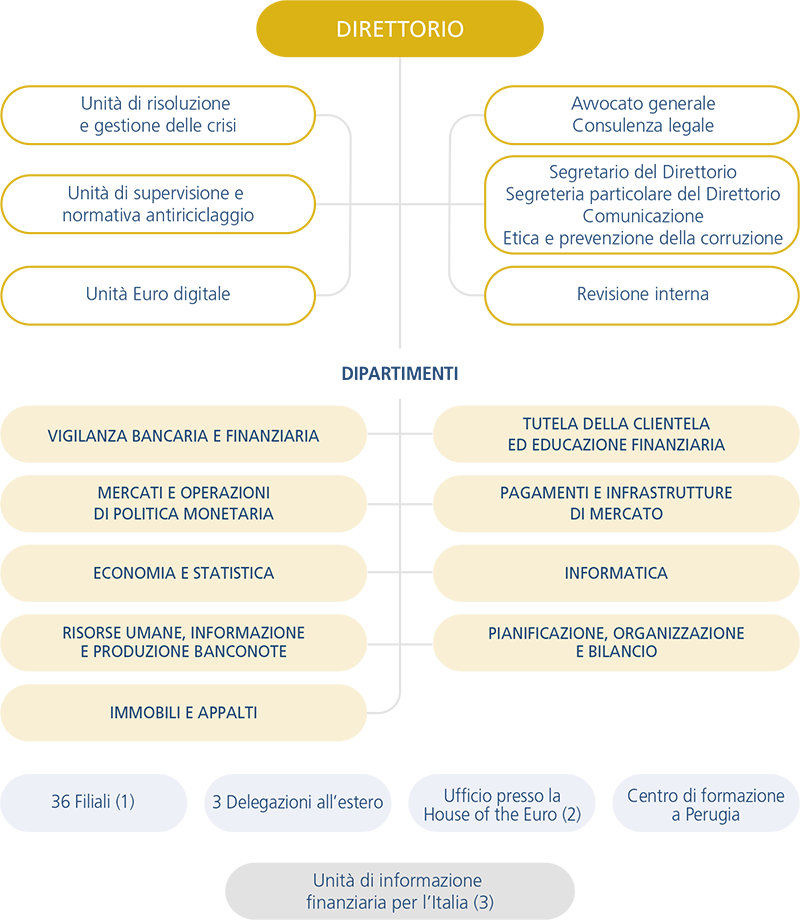
(1) Dopo la chiusura nel 2026 delle Filiali di Brescia e di Livorno. - (2) La House of the Euro, costituita a Bruxelles, ospita esperti della BCE e delle BCN per intensificare la cooperazione su tematiche di interesse comune, come la regolamentazione bancaria e finanziaria e il Piano nazionale di ripresa e resilienza (PNRR). - (3) L'Unità di informazione finanziaria per l'Italia (UIF), istituita ai sensi del D.lgs. 231/2007, esercita le proprie funzioni in autonomia e indipendenza.
Le risorse umane. - Alla fine del 2025 la Banca d'Italia aveva 7.050 dipendenti, 23 in più rispetto all'anno precedente. Un lieve aumento è stato registrato nell'Amministrazione centrale (62 in più, 4.866 alla fine del 2025) a fronte di una contenuta riduzione nella rete territoriale (36 in meno, 1.908 alla fine dell'anno) e nel personale in temporaneo distacco o aspettativa presso altri enti e organismi (3 in meno, 272 alla fine dell'anno, di cui il 28 per cento presso la BCE e il 17 per cento presso organismi internazionali); non ha subito variazioni il numero degli addetti alle Delegazioni all'estero (4 persone). Per il 2026 sono stati pianificati oltre 400 ingressi, per sostenere i principali fronti di impegno in ambito europeo e l'avvio dei nuovi assetti della rete territoriale, nonché per accompagnare il percorso di trasformazione digitale della Banca; si prevede alla fine del 2026 una crescita dell'organico.
Le risorse informatiche. - Per ampliare la portata della trasformazione digitale nella Banca e accrescere la capacità di innovazione e di utilizzo evoluto delle informazioni, proseguono gli investimenti in infrastrutture tecnologiche e in tecnologie avanzate. Nel campo dell'intelligenza artificiale generativa l'Istituto ha adottato strumenti che contribuiscono ad aumentare la produttività individuale e ha avviato una prudente ma progressiva introduzione di agenti digitali in grado di svolgere attività complesse. È in fase di completamento una nuova piattaforma per la gestione e l'analisi di grandi volumi di dati, anche di tipo non strutturato, che rappresenterà un elemento chiave per valorizzare il patrimonio informativo della Banca a sostegno delle attività istituzionali e dei processi operativi aziendali.
Nel 2025 si è concluso l'ampio programma di reingegnerizzazione delle applicazioni dell'Istituto, attuato con
l'uso di sistemi elaborativi aperti e standard, realizzando benefici in termini di flessibilità,
interoperabilità e sostenibilità tecnologica.
È proseguito il consolidamento dei servizi offerti dalla
piattaforma private cloud dei data centers della Banca, che costituiscono anche la base dell'infrastruttura
tecnologica impiegata per il progetto dell'euro digitale.
Le risorse logistiche. - È proseguito il processo di razionalizzazione e rinnovo del patrimonio immobiliare della Banca. Comprese le cessioni effettuate nel 2025 (cinque ex Filiali e un alloggio), le dismissioni avviate dal 2014 sono arrivate a interessare circa i tre quarti degli immobili non più utilizzati per fini istituzionali a seguito delle diverse riforme della rete territoriale (per un corrispettivo di 212 milioni di euro a fronte di un valore di bilancio pari a 190 milioni di euro). Sono inoltre continuati i lavori per ridisegnare gli ambienti di lavoro secondo il modello dello smart office che, insieme agli interventi di ristrutturazione, permetteranno in prospettiva di raggiungere una flessione del fabbisogno di spazi e dei relativi costi di gestione.
Il sistema dei controlli interni. - La Revisione interna, che rappresenta il terzo cardine del sistema dei controlli interni, ha effettuato 34 verifiche su processi, strutture e sistemi informatici (37 nel 2024). È stata inoltre svolta una consulenza presso la UIF sulla sicurezza nella gestione delle informazioni e dei sistemi informatici a supporto delle attività dell'Unità.
La comunicazione. - Nel 2025 è stata pubblicata una nuova versione del sito internet della Banca d'Italia, caratterizzata da un design più essenziale e da maggiore fruibilità e accessibilità. Sulle principali piattaforme è stata diffusa la serie podcast Centrale, dedicata ai compiti dell'Istituto e ai servizi per i cittadini. Le principali pubblicazioni istituzionali, di ricerca e quelle statistiche sono state scaricate 3 milioni di volte (in aumento dell'8 per cento rispetto al 2024); il sito internet ha registrato in media 1.380.000 utenti unici al mese. Il canale YouTube ha raggiunto 185.000 visualizzazioni. Riguardo alla comunicazione interna, sulla intranet aziendale sono stati pubblicati 490 contenuti tra notizie e altre informazioni utili per il personale, 63 video, interviste e podcast originali.
I risultati economici e i costi operativi. - Le risorse finanziarie dell'Istituto derivano dall'esercizio della politica monetaria, dalla gestione delle riserve valutarie, dal portafoglio titoli detenuto a scopo di investimento e dai servizi offerti. Dopo due esercizi chiusi con una perdita lorda, il risultato lordo del 2025 è tornato positivo per 3.018 milioni di euro. Per effetto dell'accantonamento di 900 milioni al fondo rischi generali e delle imposte di competenza pari a 466 milioni, l'esercizio 2025 si è chiuso con un utile netto di 1.652 milioni.
L'impiego di risorse nelle attività della Banca - valutato secondo i criteri di contabilità analitica condivisi con le altre banche centrali dell'Eurosistema e quindi non coincidente con il dato di bilancio - è risultato pari a 1.856 milioni di euro, in aumento rispetto all'anno precedente del 4 per cento in termini nominali e del 3 per cento in termini reali. Tale incremento è dovuto principalmente: (a) a maggiori oneri relativi all'area del sistema finanziario (in particolare per l'intensificarsi di alcune attività riconducibili alla vigilanza prudenziale, alla tutela della clientela bancaria e finanziaria e all'azione della UIF in tema di prevenzione del riciclaggio e del finanziamento del terrorismo); (b) all'avvio di nuovi progetti nell'area della moneta (i costi per la realizzazione dell'euro digitale e del regolamento in moneta di banca centrale delle operazioni basate sulla tecnologia a registro distribuito). Si sono invece ridotti i costi delle altre aree istituzionali (in particolare quelli per le attività di tesoreria dello Stato e per la produzione delle banconote).
A fronte dei servizi di sviluppo e gestione di infrastrutture tecnologiche per conto dell'Eurosistema, nel 2025 la Banca ha ricevuto rimborsi dalle altre BCN comproprietarie delle infrastrutture dell'Eurosistema per 71 milioni di euro (117 nel 2024) e tariffe dagli operatori per 35 milioni (38 nel 2024). Nel triennio 2026-28 l'Istituto, in qualità di fornitore di servizi, anticiperà costi che verranno poi rimborsati, per circa 260 milioni di euro; l'onere che resterà a carico della Banca, come comproprietaria, sarà inferiore e pari a 220 milioni.
L'impegno per la sostenibilità ambientale, sociale e nella condotta aziendale
La Banca d'Italia, nell'esercizio delle proprie funzioni, riconosce l'importanza dei temi legati alla sostenibilità e definisce strategie, politiche, azioni e indicatori su cui basare il proprio impegno per lo sviluppo sostenibile e per gestire gli impatti (attuali e potenziali) in tema ambientale, sociale e di condotta aziendale, nonché i connessi rischi finanziari. Le informazioni sono strutturate ispirandosi agli standard elaborati dallo European Financial Reporting Advisory Group (EFRAG).

Ambiente
L'impatto delle funzioni istituzionali sull'ambiente. - La Banca d'Italia è impegnata da tempo, nelle sedi nazionali e internazionali, a valutare le implicazioni per il sistema economico e finanziario dei rischi climatici e ambientali (fisici e di transizione) e a tenere conto degli obiettivi di sviluppo sostenibile nell'esercizio delle funzioni istituzionali. Lo fa nei suoi diversi ruoli di autorità monetaria, di supervisore degli intermediari finanziari, di investitore, di istituto di ricerca, di promotore della cultura finanziaria e di sostenibilità tra i cittadini e le imprese.
Come autorità monetaria la Banca, insieme alle altre BCN dell'area dell'euro, partecipa alla realizzazione del piano di azione dell'Eurosistema volto a includere i temi relativi al cambiamento climatico nella strategia di politica monetaria. Le misure promuovono l'integrazione dei fattori ambientali nei modelli di analisi macroeconomica, nella stima dei rischi gravanti sul bilancio dell'Eurosistema e nella gestione delle obbligazioni societarie acquisite per i portafogli di politica monetaria. Gli interventi sono concepiti in coerenza con l'obiettivo primario della stabilità dei prezzi.
Nel ruolo di autorità di vigilanza sugli intermediari bancari e finanziari, la politica dell'Istituto mira a verificare e ad accrescere la consapevolezza dei soggetti vigilati sui rischi connessi con le tematiche ambientali, nonché ad aggiornare costantemente le metodologie di supervisione.
Nel 2025 le misure assunte dalle banche significative per l'integrazione dei rischi climatici e ambientali nei propri stress test e nel processo interno di valutazione dell'adeguatezza patrimoniale sono state giudicate positivamente dalla Banca d'Italia. Anche con le banche meno significative e con gli intermediari non bancari è proseguito il dialogo sui rischi climatici e ambientali, focalizzato sul monitoraggio dell'attuazione dei piani di azione 2023-25 predisposti dagli intermediari per allinearsi alle aspettative di vigilanza.
Come istituto di ricerca, gli studi prodotti dalla Banca sui temi dell'energia e del cambiamento climatico si sono progressivamente integrati nei filoni tradizionali di analisi economica, per valutare le ricadute di tali aspetti sui sistemi economici, sul tessuto produttivo e sociale e sulla stabilità del sistema finanziario.
La natura globale dei rischi ambientali, sociali e di governo societario (environmental, social and governance, ESG) ha indotto a intensificare la cooperazione a livello nazionale, europeo e internazionale. Sul piano internazionale la Banca coopera alle attività nelle diverse organizzazioni, come il G20, il G7, il Network for Greening the Financial System (NGFS), il Consiglio per la stabilità finanziaria (Financial Stability Board, FSB) e il Comitato di Basilea per la vigilanza bancaria. A livello europeo contribuisce attivamente ai lavori normativi in ambito EBA; nell'Eurosistema si adopera nella gestione dei rischi climatici nelle operazioni istituzionali e per preparare gli intermediari e il sistema nel suo complesso ad affrontare tali rischi. A livello nazionale partecipa al Tavolo di coordinamento sulla finanza sostenibile istituito presso il MEF.
Nell'ambito dell'educazione finanziaria vengono promosse iniziative specifiche rivolte agli adulti e alle scuole per spiegare con un linguaggio semplice i temi della finanza sostenibile; una sezione dedicata a questo argomento è disponibile sul sito L'Economia per tutti .
Gli investimenti sostenibili. - Come investitore, la Banca ha integrato i criteri di sostenibilità nella gestione dei portafogli di investimento, in linea con la propria Carta degli investimenti sostenibili. Le metodologie adottate e i risultati conseguiti sono descritti nel Rapporto annuale sugli investimenti sostenibili e sui rischi climatici .
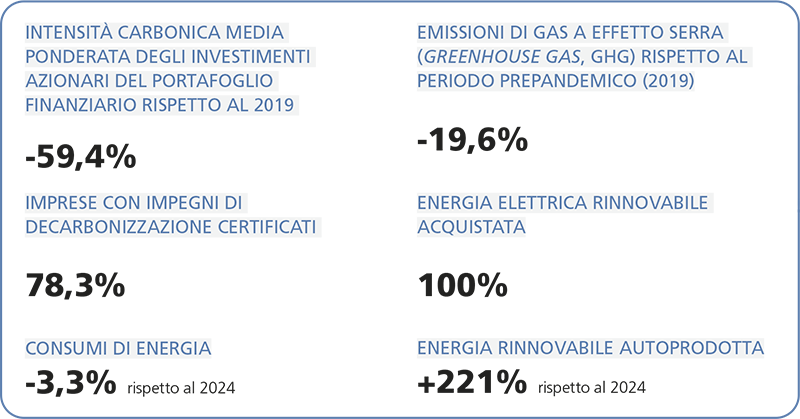
Impronta ambientale diretta. - L'Istituto è tra le prime banche centrali dell'Eurosistema ad avere adottato un Piano di transizione per la mitigazione e l'adattamento ai cambiamenti climatici. Pubblicato all'inizio del 2026, il Piano delinea strategie, obiettivi quantitativi, azioni e governance per raggiungere entro il 2050 un livello di emissioni nette di gas serra pari a zero (net zero), per ridurre l'esposizione della struttura dei costi a shock sui mercati del petrolio e del gas e per migliorare la resilienza delle infrastrutture della Banca agli effetti dei cambiamenti climatici. Il Piano prevede inoltre due obiettivi intermedi da conseguire entro il 2035: (a) la riduzione del 67 per cento delle emissioni dirette (Scope 1) e indirette per il consumo di energia (Scope 2); (b) la riduzione del 40 per cento delle emissioni indirette lungo la catena del valore della Banca (Scope 3).
Nel 2025 sono proseguite le iniziative per l'installazione di pompe di calore elettriche, l'efficientamento energetico degli edifici e degli impianti e la realizzazione di sistemi fotovoltaici. Gli ambienti di lavoro degli stabili oggetto di interventi di ristrutturazione sono stati progettati secondo i criteri dello smart office, per ridurre il fabbisogno di spazi e ottimizzarne la fruizione condivisa. È stata resa sistematica la chiusura di vari edifici non aperti al pubblico durante alcuni giorni prossimi alle festività nazionali e nel periodo estivo, al fine di contenere i consumi di energia e i costi di gestione degli stabili.
Con l'obiettivo di promuovere una mobilità più sostenibile, la flotta di navette utilizzata per collegare le diverse sedi romane della Banca comprende anche alcuni autobus meno inquinanti alimentati a metano, che costituiscono attualmente il 19 per cento del totale dei mezzi a disposizione, tenuto conto della scarsa disponibilità sul mercato di questo tipo di autobus.
Nel 2025 le emissioni totali di gas serra sono diminuite di quasi il 5 per cento rispetto all'anno precedente. Vi ha pesato soprattutto la flessione delle emissioni connesse con l'acquisto di beni strumentali e con il trasporto delle banconote tra l'Istituto e le altre banche centrali. Rispetto al 2019, anno base di riferimento individuato nel piano di transizione adottato dalla Banca, le emissioni risultano inferiori di quasi il 20 per cento. Nel confronto con il 2024 il consumo totale di energia si è ridotto complessivamente del 3,3 per cento. In particolare, il fabbisogno elettrico è sceso di circa il 3,8 per cento, mentre quello del gas metano del 3,7 per cento; sono invece aumentati i consumi di gasolio per i gruppi elettrogeni presso il Centro Donato Menichella, legati a esigenze straordinarie di manutenzione e gestione. Nell'anno è cresciuta in modo significativo la quota di energia rinnovabile autoprodotta.
Figura
La Banca d'Italia e l'ambiente nel 2025

Impegno sociale
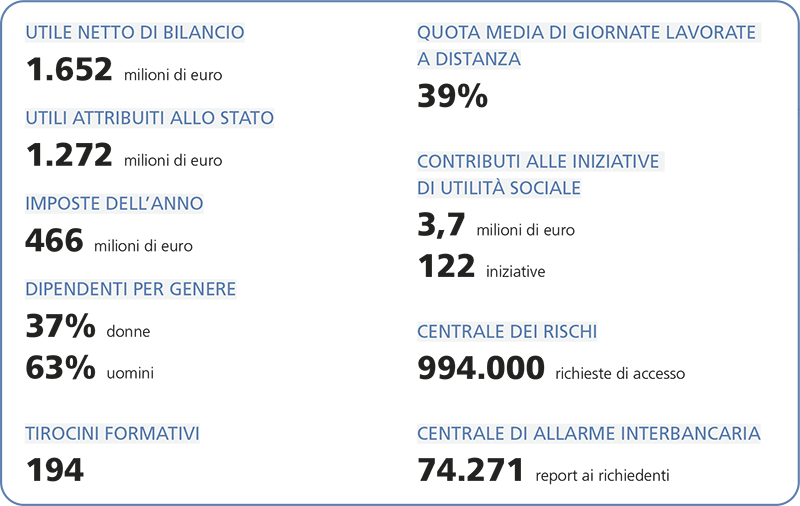
Collettività. - L'Istituto influisce sulla vita dei cittadini, tutelando la stabilità dei prezzi, salvaguardando la sana e prudente gestione degli intermediari bancari e finanziari e il corretto funzionamento delle infrastrutture, dei sistemi e servizi di pagamento. Nello svolgere tali funzioni, la Banca consegue risultati economici che vanno a vantaggio della collettività, mediante la distribuzione degli utili allo Stato (in aggiunta al versamento delle imposte): per l'esercizio 2025 sono stati assegnati allo Stato 1.272 milioni di euro; le imposte di competenza dell'anno sono state pari a 466 milioni.
Valorizzazione delle risorse umane. - La gestione del personale è orientata a sostenere lo sviluppo delle professionalità e la piena valorizzazione del capitale umano, riconosciuti come fattori strategici per il perseguimento delle finalità istituzionali, anche nell'ottica di rendere l'organizzazione sempre più efficiente e capace di innovare. In tale prospettiva, le politiche di assunzione hanno continuato a sostenere il crescente fabbisogno di diversificazione delle competenze, rafforzando trasversalmente le funzioni della Banca anche con il reclutamento di figure specialistiche accanto ai profili professionali tradizionali.
Sono previsti specifici canali di ascolto e coinvolgimento a disposizione dei dipendenti. Le politiche gestionali sono improntate a principi di imparzialità e non discriminazione.
Nel corso del 2025 sono state potenziate le politiche volte a ridurre le differenze di genere nel complesso della
compagine e nei ruoli manageriali; in tale prospettiva è stata anche approvata una specifica misura a supporto
della genitorialità.
È attualmente in fase di rinnovo la certificazione EDGE - riconosciuta dalla EDGE
Certified Foundation e già conseguita dalla Banca nel 2024 - che valuta le politiche in materia di parità di
genere e di inclusione delle persone con disabilità, delle comunità LGBTQ+ e delle diverse generazioni.
In tema di tutela della salute e sicurezza del personale: (a) è stata effettuata una nuova valutazione oggettiva dello stress correlato al lavoro che si è conclusa con un quadro complessivamente rassicurante, ma con alcuni ambiti di attenzione e miglioramento; (b) è stata affinata la metodologia di valutazione dei rischi; (c) sono state svolte indagini specifiche e sopralluoghi sia nell'Amministrazione centrale sia nella rete territoriale.
Particolare attenzione è riservata allo sviluppo delle persone, anche attraverso percorsi mirati, sia professionali sia manageriali, e figure consulenziali dedicate. Nel 2025 la Banca ha ottenuto le certificazioni UNI ISO 29993:2019 e UNI ISO 29994:2021 per i servizi di formazione. Nel complesso, il 97 per cento del personale ha aderito a iniziative formative, con una media di 48 ore per partecipante (3 per cento del totale delle ore lavorate); il 62 per cento di tali iniziative si è svolto online.
Le persone partecipano alle decisioni destinate a incidere sul rapporto di lavoro prioritariamente attraverso i propri rappresentanti, i sindacati. L'adesione sindacale in Banca è un fenomeno significativo (sono presenti 8 organizzazioni sindacali che al 31 dicembre 2025 contavano 4.602 iscritti).
Nel corso del 2025 la Banca e i sindacati hanno raggiunto intese su diverse questioni rilevanti, quali tematiche economiche, welfare aziendale, misure di sostegno a supporto dell'attuazione del piano di riassetto territoriale, nonché sull'aggiornamento della cornice normativa ed economica riguardante il processo produttivo delle banconote.
Servizi informativi e accessibilità. - L'Istituto offre servizi informativi rivolti direttamente al pubblico, molti dei quali mediante il proprio sito internet e in particolare attraverso la piattaforma Servizi online per il cittadino . Ai cittadini è tra l'altro consentito l'accesso a due archivi, la Centrale dei rischi (CR) e la Centrale di allarme interbancaria (CAI), per verificare la propria posizione e richiedere alle banche o alle società finanziarie la correzione o la cancellazione dei dati in caso di segnalazioni errate o non dovute. Ad alcuni servizi si accede telefonando a un numero verde. Nel 2025 sono state presentate oltre 994.000 richieste di accesso ai dati della CR (947.000 nel 2024) e 74.271 a quelli della CAI (73.457 nel 2024). Dal 13 aprile 2026 il portale dei servizi online per il cittadino è l'unico canale telematico ammesso per sottoporre le richieste di accesso alle informazioni di CR e CAI e per la presentazione degli esposti. La Banca offre inoltre gratuitamente servizi specifici presso i punti dedicati della rete territoriale.
Iniziative culturali e di solidarietà. - L'impegno sociale dell'Istituto si sostanzia anche nella promozione della cultura, nell'organizzazione di iniziative a sostegno di enti e associazioni che operano in campo ambientale e sociale, oltre che nell'offerta di servizi informativi rivolti direttamente al pubblico. Nel 2025 sono proseguiti i prestiti di opere d'arte e le visite guidate ai palazzi storici dell'Istituto. Nell'ambito della formazione dei più giovani, oltre ai Percorsi per le competenze trasversali e per l'orientamento (PCTO, ora Percorsi di formazione scuola lavoro) destinati a studentesse e studenti delle scuole secondarie di secondo grado (238 svolti nell'anno), sono stati offerti, in collaborazione con numerose università, 194 tirocini formativi a neolaureate e neolaureati magistrali. Ai sensi di una disposizione da lungo tempo presente nello Statuto della Banca, sono stati erogati contributi per complessivi 3,7 milioni di euro a sostegno di 122 progetti di interesse pubblico. Le erogazioni sono disposte - a valere su uno stanziamento definito ogni anno dal Consiglio superiore - secondo criteri e procedure consultabili sul sito internet, dove viene anche pubblicato annualmente l'elenco dei soggetti destinatari di contributi superiori a 1.000 euro.
Figura
La Banca d'Italia e l'impegno sociale nel 2025

Condotta aziendale
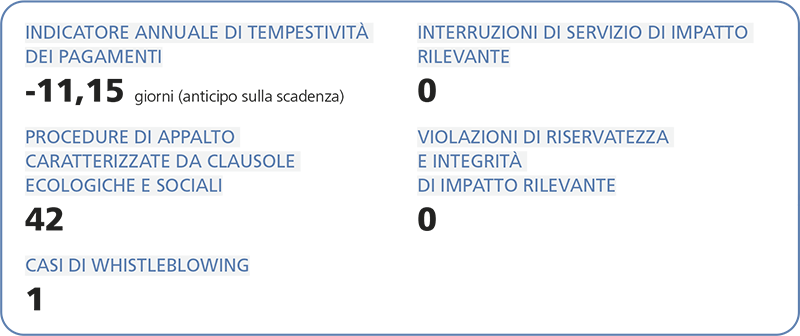
Etica, prevenzione della corruzione e trasparenza. - La Banca è impegnata a promuovere l'integrità e la trasparenza nello svolgimento delle proprie attività. La correttezza dei comportamenti del personale è presidiata attraverso una strategia unitaria di prevenzione delle condotte illecite e un quadro etico basato su regole che mirano a prevenire i conflitti di interesse e l'abuso di informazioni riservate. Il D.lgs. 208/2025 di attuazione della Direttiva UE/2024/1619 (Capital Requirement Directive, CRD6) ha introdotto disposizioni in tema di conflitti di interesse, anche successivi alla cessazione dell'incarico, e di investimenti finanziari sia per i membri del Direttorio sia per il personale addetto ad alcune funzioni chiave (vigilanza e operazioni sui mercati). Le procedure interne sono state adeguate. Particolare attenzione è costantemente dedicata anche alla formazione dei dipendenti per accrescerne la sensibilità sui temi dell'etica e dell'integrità e per consolidare la cultura della legalità.
Rapporti con i fornitori. - La Banca d'Italia si ispira ai principi di buona fede, concorrenza, imparzialità e non discriminazione. Obiettivi prioritari sono: il rispetto della normativa; la qualità dell'approvvigionamento; l'inserimento di clausole ambientali e di tutela dei lavoratori e la digitalizzazione del processo di spesa. Nel 2025 l'Istituto ha proseguito la collaborazione in materia di appalti sia con autorità nazionali sia con le BCN nell'ambito dell'Ufficio di Coordinamento degli acquisti dell'Eurosistema (Eurosystem Procurement Coordination Office, EPCO).
Sicurezza, integrità e affidabilità dei sistemi informativi. - La disponibilità di sistemi informativi affidabili, efficienti, sicuri e resilienti rappresenta un presupposto fondamentale per il corretto svolgimento delle funzioni della Banca e per la stabilità stessa del sistema finanziario.
Nel 2025 è stata rivista la politica in tema di servizi in cloud, rafforzando le valutazioni dei rischi connessi, e sono state ampliate le attività di contrasto alle minacce cibernetiche; sono state avviate specifiche iniziative per sensibilizzare il personale sui corretti comportamenti da adottare.
Figura
La Banca d'Italia e la condotta aziendale nel 2025
Il Piano strategico della Banca
La visione strategica orienta lo sviluppo delle funzioni e delle attività nel lungo periodo. La Banca d'Italia è un'istituzione aperta all'innovazione, che mette le persone al centro della propria azione, promuove trasparenza, sostenibilità e sicurezza e rafforza la fiducia della collettività anche offrendo servizi di qualità, più efficienti e accessibili, utilizzando in modo ottimale le opportunità offerte dalla tecnologia.
Il Piano strategico 2026-2028 - predisposto nel corso del 2025 e pubblicato a marzo del 2026 - traduce il mandato istituzionale della Banca d'Italia in priorità operative concrete, orientando l'allocazione delle risorse in funzione degli obiettivi.
Figura
Piano strategico 2026-2028
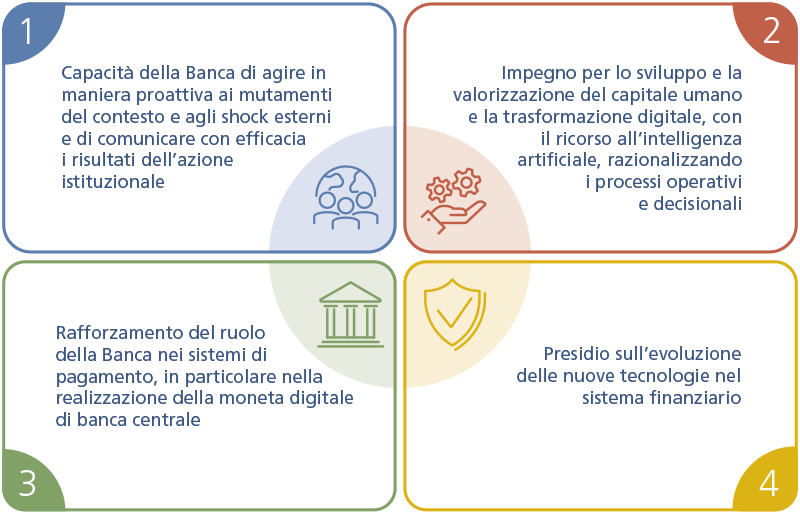
Per il conseguimento degli obiettivi sono stati programmati progetti pluriennali e iniziative che coinvolgono l'Amministrazione centrale e la rete territoriale.
Nel 2025 si è chiuso il precedente ciclo di pianificazione strategica per il periodo 2023-25 (cfr. la Relazione sulla gestione e sulla sostenibilità sul 2024), delle cui attività svolte nell'anno si dà conto diffusamente nella presente Relazione.
Testo della pubblicazione
-
29 maggio 2026
-
29 maggio 2026

 Instagram
 YouTube
  X - Banca d’Italia
  Linkedin
  RSS
RSS  E-mail Alert