

La rete territoriale della Banca d’Italia è composta da 36 Filiali articolate in 21 Filiali regionali (situate nei capoluoghi di regione e nella provincia autonoma di Bolzano), 9 Filiali provinciali e 6 Filiali specializzate nel trattamento del contante. Tra le Filiali regionali, 13 hanno la qualifica di Sede (Ancona, Bari, Bologna, Cagliari, Firenze, Genova, Milano, Napoli, Palermo, Roma, Torino, Trieste, Venezia).
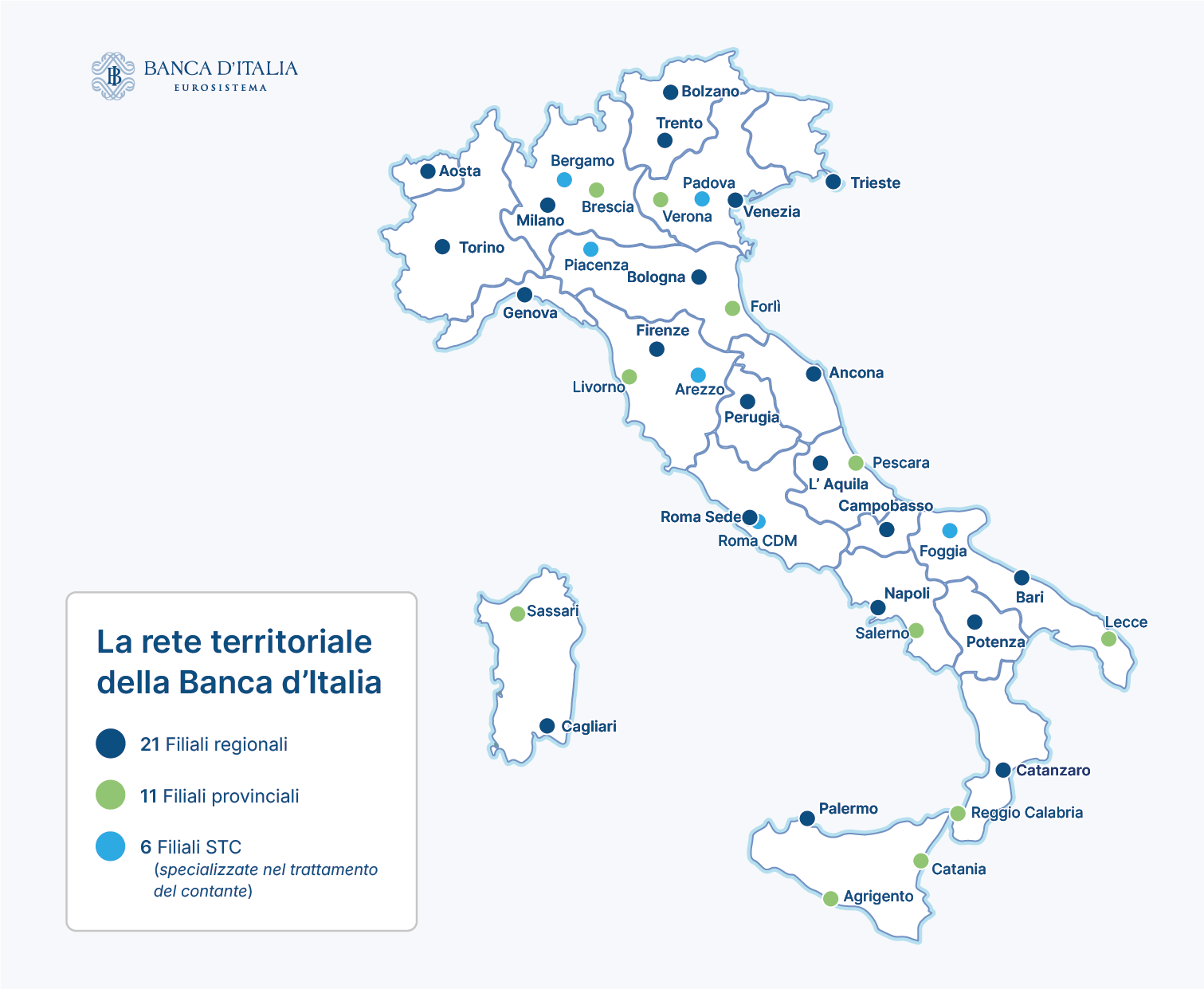
La rete delle Filiali contribuisce allo svolgimento delle funzioni istituzionali della Banca operando sul territorio in modo integrato con l’Amministrazione Centrale. Le Filiali rappresentano un presidio importante di conoscenza e dialogo con le istituzioni locali e offrono, pur se in modo differenziato, servizi ai cittadini. Le attività svolte nella rete riguardano:
- la tutela dei clienti degli intermediari bancari e finanziari per promuovere la correttezza e la trasparenza delle relazioni attraverso la vigilanza sul comportamento degli intermediari, l’offerta di strumenti di tutela quali l’esame dei ricorsi presentati all’Arbitro Bancario Finanziario e degli esposti, la realizzazione di iniziative di educazione finanziaria;
- i servizi informativi per l’accesso alla Centrale dei rischi e alla Centrale di allarme interbancaria;
- la circolazione monetaria, con l'immissione nel circuito delle banconote in euro e il presidio dell'integrità e della qualità dei biglietti in circolazione;
- l’analisi economica e le rilevazioni statistiche a livello locale tramite lo svolgimento di indagini campionarie, lo studio della struttura economico-finanziaria della regione, la pubblicazione e la presentazione di documenti e analisi sull’andamento dell’economia regionale;
- la vigilanza prudenziale nei confronti degli intermediari bancari e finanziari attivi in ambito prevalentemente locale;
- la vigilanza antiriciclaggio (AML) nei confronti degli intermediari bancari e finanziari attivi in ambito prevalentemente locale;
- la valutazione del merito di credito delle imprese non finanziarie (In-house Credit Assessment System, o ICAS) per i fini della politica monetaria.
Tutte le 21 Filiali regionali svolgono funzioni di tutela della clientela, ricerca economica, educazione finanziaria e gestione del contante. Alcune svolgono anche ulteriori funzioni, come rappresentato nell’infografica sottostante.
Le 9 Filiali provinciali sono focalizzate sulla gestione del contante verso utenza privata e istituzionale e sui servizi informativi. Operano in stretto raccordo con la Filiale regionale di riferimento e contribuiscono ad attività di educazione finanziaria e analisi economica.
Le 6 Filiali specializzate nel trattamento del contante (STC) sono dedicate al trattamento del contante con assetti tecnologici avanzati. Non offrono servizi al pubblico, possono svolgere iniziative sul territorio, in particolare di educazione finanziaria.
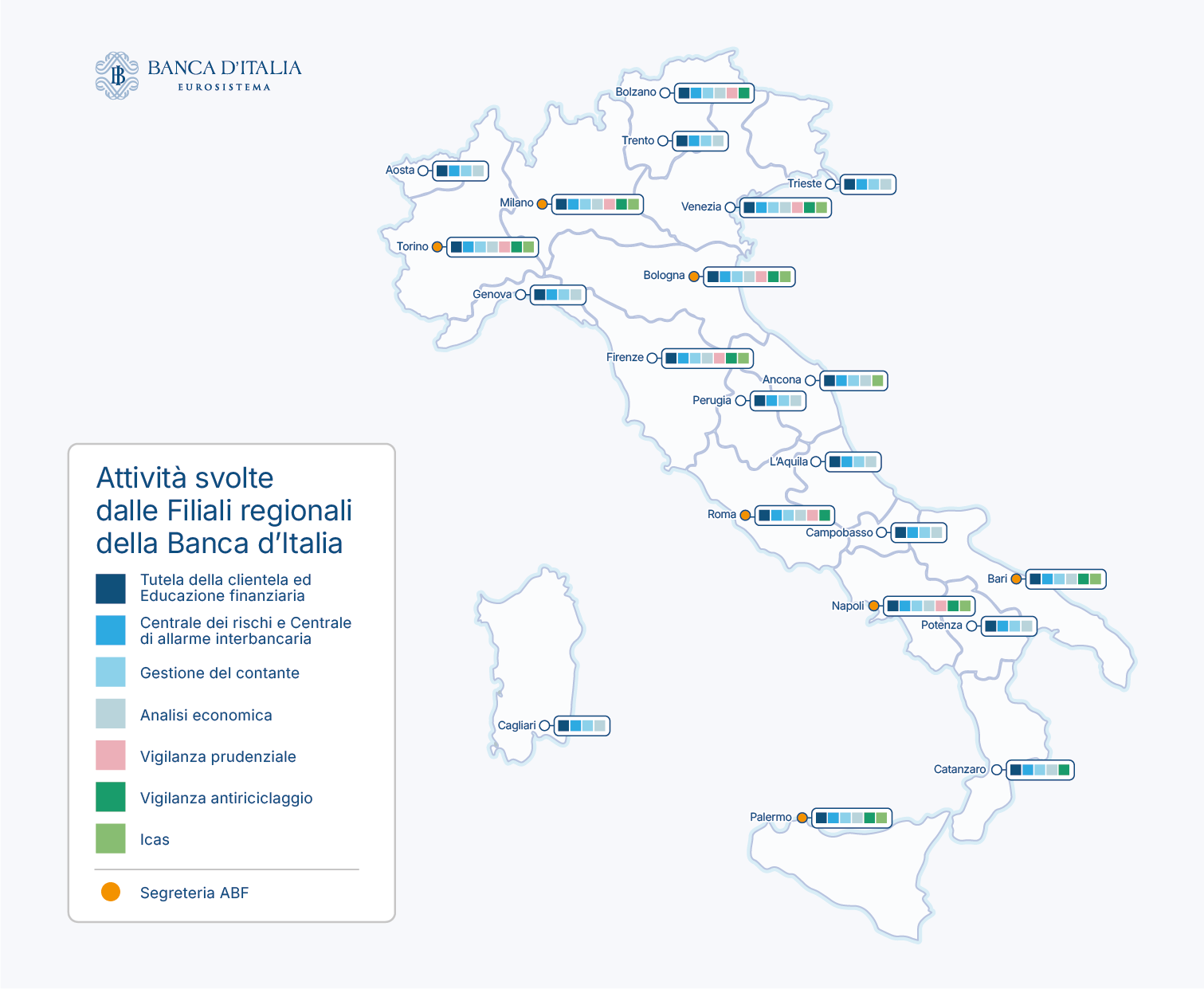
Nel 2025 la Banca ha avviato un piano con il quale vengono decentrate ulteriori responsabilità di vigilanza (prudenziale, antiriciclaggio e di tutela della clientela) e rafforzate le attività di educazione finanziaria e di valutazione del merito di credito delle imprese non finanziarie.
Per ragioni di efficienza e di razionalizzazione delle attività sono state chiuse le Filiali di Brescia e Livorno, portando il numero delle Filiali da 38 a 36; tramite le Sedi regionali di Milano e Firenze, la Banca non farà mancare il suo apporto alle istituzioni e alle comunità di questi territori.
Sezione di approfondimento
Il Consiglio di Reggenza delle Sedi. In ciascuna delle 13 Sedi della Banca vi è un Consiglio di Reggenza che cura l'amministrazione della Sede e alcuni specifici servizi connessi con le verifiche dei valori. Il Consiglio di Reggenza vigila affinché siano osservate le prescrizioni e le istruzioni dell'Amministrazione centrale; esamina e approva il preventivo delle spese di amministrazione della Sede.
I reggenti sono nominati dal Consiglio superiore, su proposta del Governatore, per sei anni e scadono per metà ogni triennio. Essi sono rieleggibili. Il loro numero varia, in ragione dell'attività delle singole Sedi. Del Consiglio fa parte il direttore della Sede.
I reggenti sono scelti tra le persone aventi profonda conoscenza dell'economia locale. I candidati alla carica di Consigliere sono individuati tra personalità con significativa esperienza nel settore imprenditoriale, nell'attività libero-professionale, nell'insegnamento universitario o nell'alta dirigenza della pubblica amministrazione che siano altresì in possesso di requisiti di onorabilità e di indipendenza.
Ogni Consiglio nomina fra i reggenti, per un periodo di tre anni, un presidente e un segretario, i quali possono essere rieletti.
I Consiglieri delle Succursali. In ciascuna Succursale vi sono da quattro a dieci Consiglieri, in numero variabile in ragione dell'attività delle singole Succursali. I Consiglieri sono nominati dal Consiglio superiore, su proposta del Governatore, tra persone in possesso dei requisiti previsti per i reggenti di Sede. Essi durano in carica sei anni, si rinnovano per metà ogni triennio e sono rieleggibili.
- Data Pubblicazione::13 luglio 2026Elenco dei membri dei Consigli di Reggenza delle Sedi e dei Consiglieri delle Succursalipdf 132 KB
Argomenti Correlati
-
Servizi al cittadino
Nelle pagine che seguono si trovano informazioni, procedure e moduli per accedere ai servizi della Banca d'Italia. Per maggiori informazioni sui servizi è anche possibile chiamare il numero verde 800 19 69 69 o rivolgersi alle singole Filiali.
-
Economie regionali
La collana contiene analisi sulla situazione economica e la struttura economica e finanziaria delle regioni italiane nonché le differenze geografiche nell'offerta e nella domanda di credito.


 Instagram
 YouTube
  X - Banca d’Italia
  Linkedin
  RSS
RSS  E-mail Alert