

La riduzione dell'impatto ambientale della Banca d'Italia
Nel 2008, con la pubblicazione del primo documento di Politica ambientale (poi aggiornato nel 2015), la Banca d'Italia ha avviato un percorso sistematico per ridurre il proprio impatto sull'ambiente. Le principali iniziative realizzate e gli indicatori ambientali sono stati rendicontati annualmente nel Rapporto ambientale, elaborato nel 2010 e aggiornato fino al 2024. Dal 2025 i contenuti del Rapporto ambientale sono confluiti nella nuova Relazione sulla gestione e sulla sostenibilità.
Nel 2026 la Banca ha pubblicato il Piano di transizione per la mitigazione e l'adattamento ai cambiamenti climatici che definisce la strategia e le azioni per diminuire progressivamente l'impronta carbonica delle operazioni aziendali verso un livello di emissioni nette pari a zero (net zero) e per rafforzare la resilienza ai rischi climatici.
Gli obiettivi
La Banca si è posta l'obiettivo di diminuire entro il 2050 le emissioni di gas serra del 90 per cento rispetto al 2019 (ultimo anno pre-pandemico, scelto come anno base di riferimento).
Per raggiungere questo obiettivo, è stato messo a punto un programma con iniziative di breve e medio termine finalizzate a:
- diminuire i consumi di combustibili fossili, attraverso l'elettrificazione degli impianti di riscaldamento;
- promuovere l'autoproduzione di energia da fonti rinnovabili;
- migliorare le prestazioni energetiche di edifici e impianti tecnologici e ottimizzare l'assetto logistico;
- rafforzare la resilienza degli edifici e dei processi di lavoro ai cambiamenti climatici;
- diminuire ulteriormente l'impronta ambientale della produzione e della circolazione delle banconote;
- favorire la decarbonizzazione della catena del valore e rafforzare il partenariato con altre istituzioni pubbliche sui temi ambientali.
Le azioni intraprese
Nel tempo la Banca ha realizzato numerose iniziative per ridurre il proprio impatto sull'ambiente:
- acquisto dal 2013 di energia elettrica proveniente solo da fonti rinnovabili;
- installazione di sei impianti fotovoltaici per l'autoproduzione di energia elettrica;
- interventi di efficientamento energetico degli edifici e dei due centri di elaborazione dati;
- digitalizzazione dei processi di lavoro;
- utilizzo di carta riciclata e riduzione del numero delle stampanti e della stampa delle pubblicazioni istituzionali;
- riduzione all'origine dei rifiuti prodotti e progressiva diminuzione della plastica monouso;
- termovalorizzazione del 100 per cento dei rifiuti costituiti da banconote logore, triturate a valle del processo di selezione del contante;
- iniziative per una mobilità più sostenibile come auto elettriche, torrette di ricarica per mezzi elettrici e stalli per biciclette;
- azioni per ridurre l'impatto ambientale dei viaggi di lavoro (ad es. l'utilizzo esclusivo del treno nelle tratte coperte dall'alta velocità);
- inserimento di clausole ecologiche e sociali negli appalti.
I risultati raggiunti
Le iniziative realizzate hanno permesso una significativa riduzione delle emissioni di gas serra, che si sono attestate nel 2025 su livelli inferiori di circa il 20 per cento rispetto al 2019.
Impronta carbonica della Banca d'Italia - Emissioni di anidride carbonica equivalente 2010-2025 (1)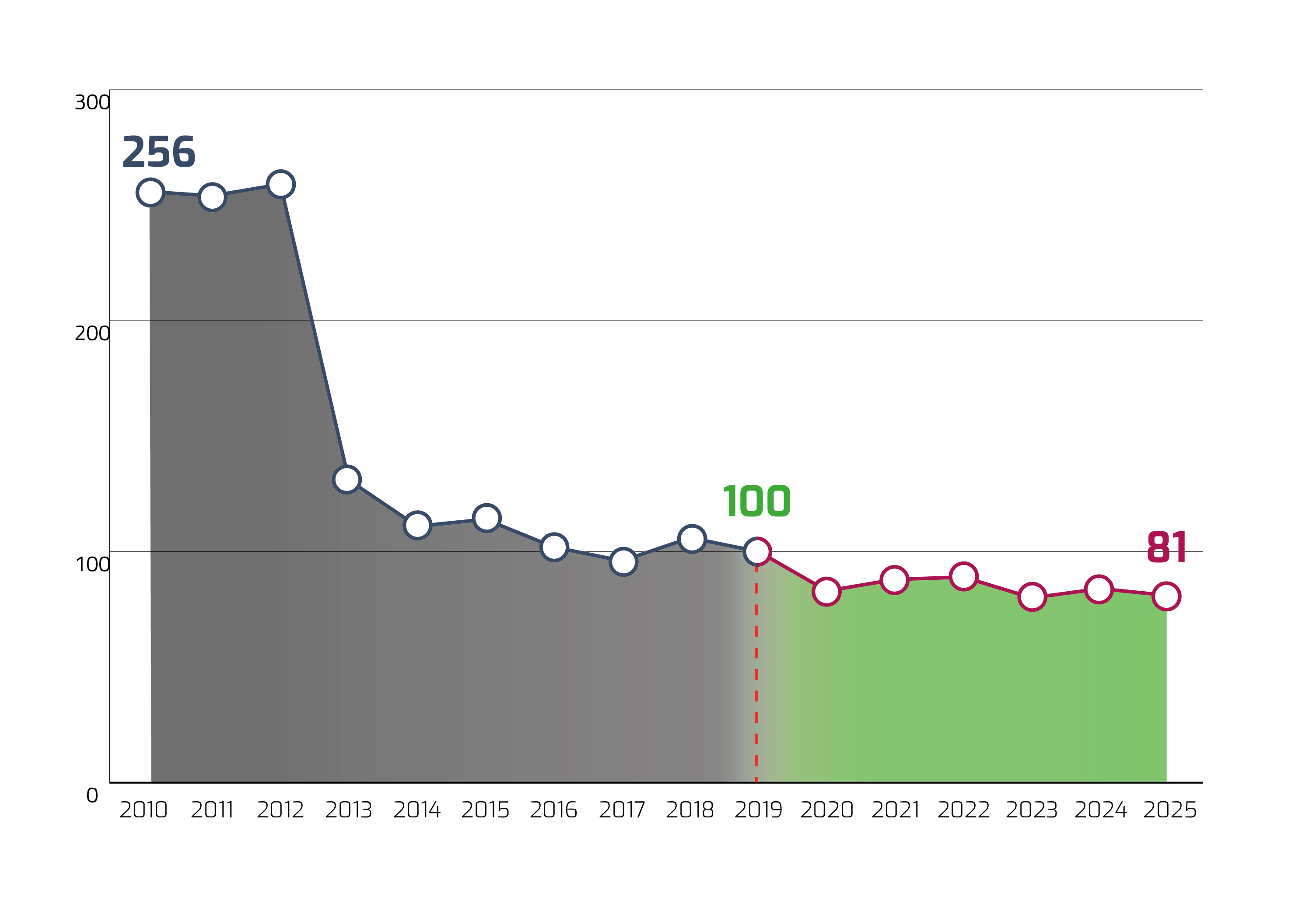
(1) (numeri indice, 2019=100). Dal 2019 le emissioni di gas serra sono state calcolate con una diversa metodologia.
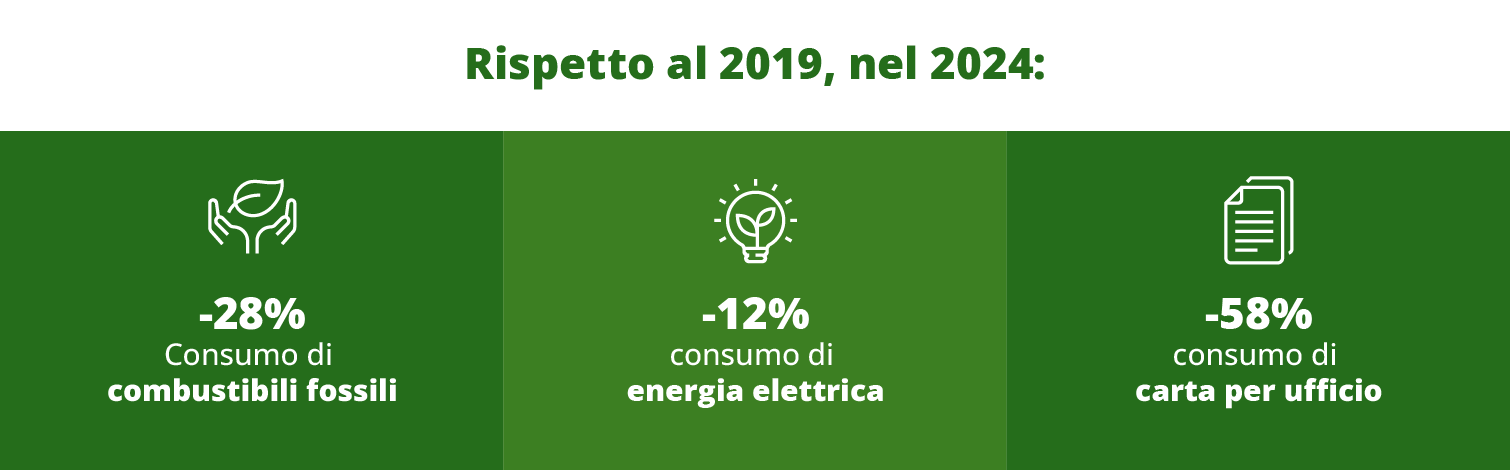
Risultati positivi sono stati ottenuti anche in termini di riduzione dei consumi di energia e risorse.
L'impegno ambientale della Banca è attestato dal conseguimento di certificazioni rilasciate da enti esterni: lo stabilimento di produzione delle banconote è dotato di un sistema di gestione ambientale certificato dal 2004 secondo lo standard ISO 14001; il Centro Donato Menichella di Frascati, edificio con il maggior consumo energetico anche per la presenza di un centro di elaborazione dati, è dotato di un sistema di gestione dell'energia certificato secondo lo standard ISO 50001.
Collaborazioni esterne
La Banca partecipa a diversi gruppi di lavoro sui temi ambientali a livello:
- internazionale (tra cui il Network for Greening the Financial System e quello per la revisione degli standard del GHG Protocol sul calcolo dell'impronta carbonica delle organizzazioni),
- europeo (Climate Change Forum e Environmental Network of Central Banks dell'Eurosistema),
- nazionale (UNI e ABILab).
Collabora con la Scuola Nazionale dell'Amministrazione, il mondo accademico e alcuni enti di ricerca: di recente ha condotto con l'ENEA uno studio sugli impatti ambientali del lavoro da remoto.
Nel 2024 e 2025, in collaborazione con il Comando Unità forestali, ambientali e agroalimentari dei Carabinieri, ha realizzato un programma di interventi di forestazione urbana, con la piantumazione di 7.200 alberi in cinque aree del territorio italiano. Inoltre ha aderito al Climate City Contract di Roma Capitale.
Da diversi anni partecipa a eventi di sensibilizzazione sui temi ambientali tra cui la Giornata nazionale del risparmio energetico e l'Ora della terra.

 Instagram
 YouTube
  X - Banca d’Italia
  Linkedin
  RSS
RSS  E-mail Alert