

Banca d'Italia has been conducting since 1996 a survey on international tourism primarily to collect information for compiling the 'Travel' item (which includes goods and services acquired from an economy by non-residents during visits to that economy) and the 'Passenger transport services' item in Italy's balance of payments, in line with the methodological conventions laid out in the sixth edition of the IMF's manual (BPM6). The survey is based on interviews and counts of resident and non-resident travellers at the Italian borders (road and rail crossings, international ports and airports); it is integrated with administrative data and, since end-2020, with mobile phone data, where available.
The survey also serves as a useful database for operators in the tourism sector and researchers, thanks to the wide range of analytical data provided alongside those gathered strictly for balance of payment requirements. The data are available on this website both in aggregate form and as microdata.
Monthly brief on international tourism
Last July, Italy's tourism balance recorded a surplus of €4.7 billion, up from the same month in 2025. Both spending by foreign travellers in Italy (€8.3 billion) and spending by Italian travellers abroad (€3.6 billion) increased compared with July 2025, by 6.8 and 1.5 per cent, respectively.
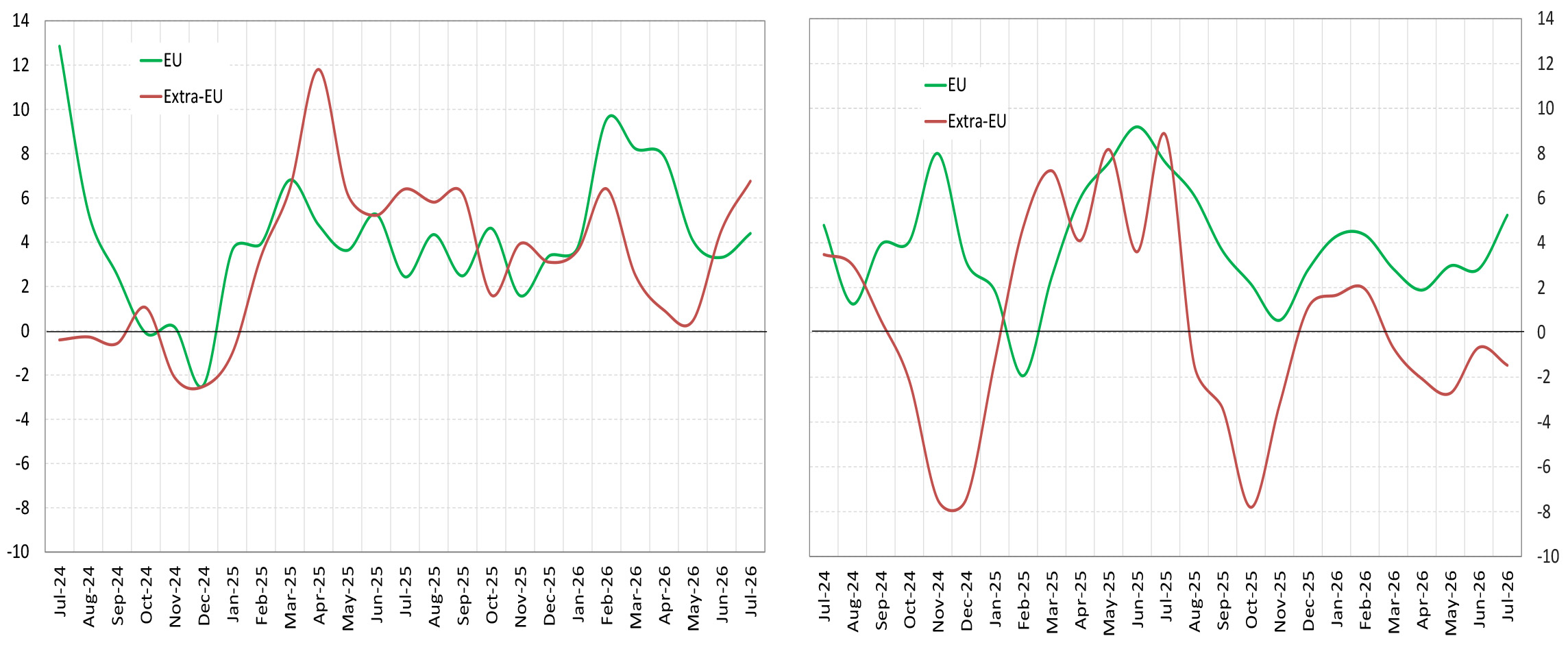
For the three-month period ending in July 2026, both flows also increased compared with the same period of the previous year (Figure 1), with receipts once again growing faster than expenditure (5.5 per cent and 2.1 per cent, respectively). The increase in spending in Italy was stronger among travellers from non-EU countries than among those from EU countries (6.8 and 4.4 per cent, respectively; Figure 2, left-hand panel). By contrast, spending by Italian travellers abroad increased in EU countries (5.2 per cent) but declined in non-EU countries (-1.5 per cent; Figure 2, right-hand panel).
Fig. 1 - Italy's inbound and outbound tourism expenditure
(3-month moving averages; year-on-year percentage changes)
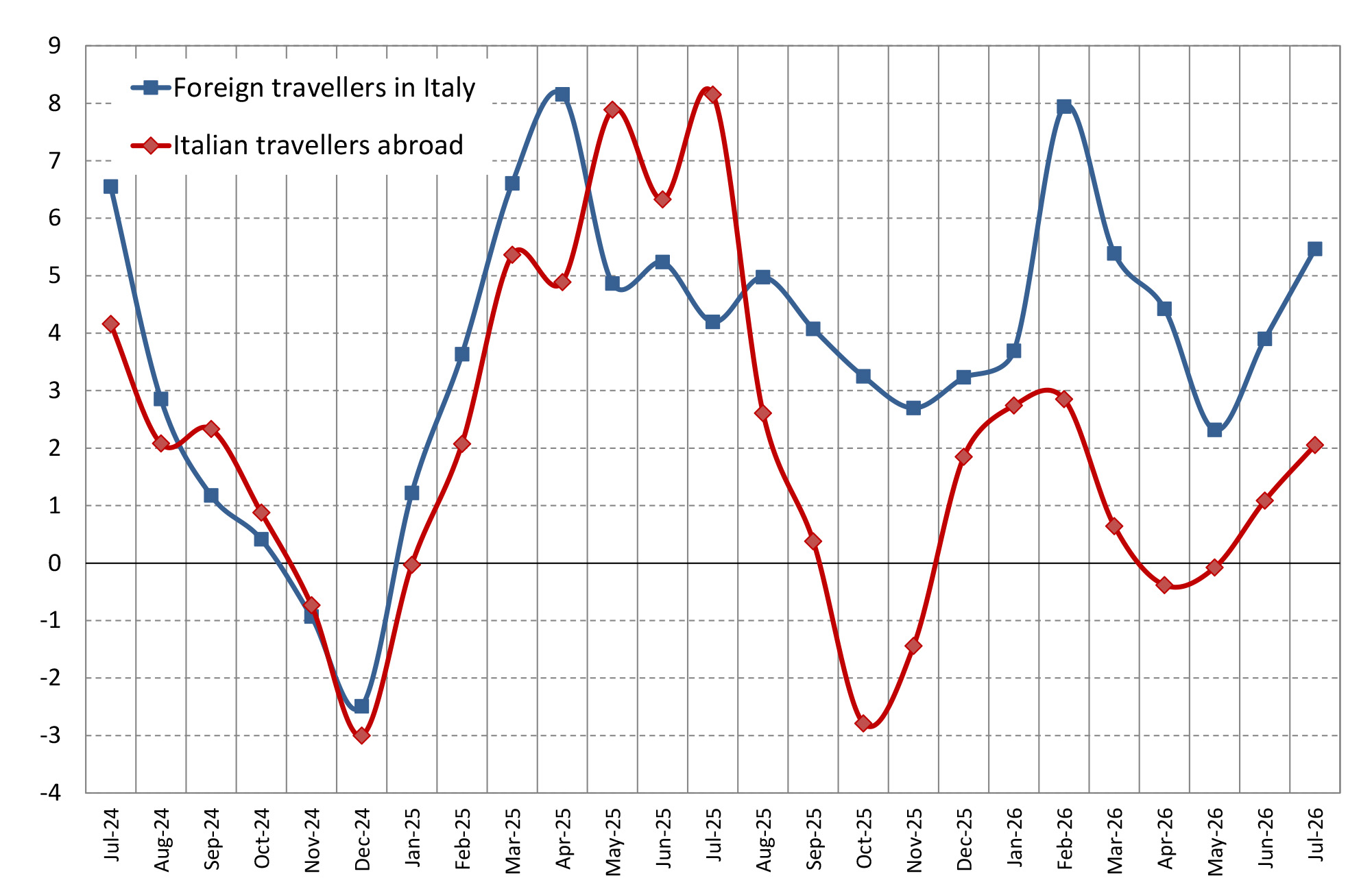
Fig. 2 - Italy's inbound and outbound tourism expenditure by geographical area
(3-month moving averages; year-on-year percentage changes)

 Instagram
 YouTube
 X - Banca d'Italia
 Linkedin
 RSS
RSS
 E-mail Alert